Understanding environmental metrics for lighting


Product sustainability has become a critical focus in the lighting industry, driven by evolving regulations and increasing customer expectations across UK estates. Manufacturers are now tasked with demonstrating their environmental responsibility through various metrics and standards. Understanding these frameworks, TM66, TM65, Life Cycle Assessments (LCAs), and Environmental Product Declarations (EPDs), helps facility managers ask the right questions when specifying, procuring, and maintaining lighting.
Flavie Lowres, Environmental Metrics Manager at Recolight, outlines the environmental metrics for lighting and what they mean in practice for facility management teams.
TM66: Assessing Circularity in Lighting Products
Developed by the Society of Light and Lighting (SLL), TM66 provides a framework for evaluating how well lighting products adhere to circular economy principles. It assigns a score from 0 to 4, reflecting a product’s design for disassembly, use of recycled materials, and potential for repair and remanufacturing; factors that can influence maintenance, upgrades, and end-of-life planning.
Advantages:
- Offers a quick and cost-effective assessment method.
- Encourages manufacturers to consider whole-life value in design.
Limitations:
- Mostly relevant to the UK market. Self-certified.
- A single score may oversimplify complex environmental impacts.
While TM66 serves as a valuable starting point, it should be complemented with more comprehensive assessments when comparing options for major refurbishments or portfolio-wide upgrades.
TM65.2: Calculating Embodied Carbon in Lighting
TM65.2 focuses on estimating the embodied carbon of lighting products—the emissions associated with raw materials, manufacturing, transportation, and end-of-life processes. As the UK grid becomes greener, operational carbon footprints decrease, making embodied carbon a more significant factor in a product’s environmental impact and in how projects perform against organisational net zero targets.
Advantages:
- Provides a straightforward calculation using representative conversion factors.
- Facilitates comparison between products based on embodied carbon.
- Utilises real data on materials and component masses.
Limitations:
- Mostly relevant to the UK market.
- Self-certified.
- Focuses solely on carbon, omitting other environmental factors.
- Offers a high-level approximation rather than precise measurements.
TM65 serves as an accessible entry point for organisations beginning to assess environmental impact at the product level, and it can support early-stage options appraisal, procurement conversations, and carbon reporting.
Life Cycle Assessment (LCA): Comprehensive Environmental Analysis
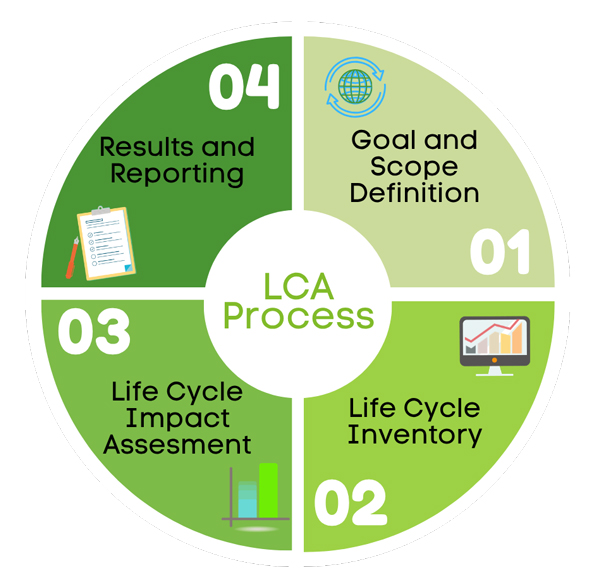
A Life Cycle Assessment (LCA) provides an in-depth evaluation of a product’s potential environmental impact throughout its entire lifecycle, from raw material extraction to disposal. Unlike TM65.2, which focuses on carbon emissions, a LCA encompasses multiple impact categories, including water usage, pollution, and resource depletion.
Advantages:
- Delivers a holistic view of environmental impacts.
- Based on real-world, evidence-based data.
- Recognised internationally, facilitating global applicability.
Limitations:
- Self-certified.
LCAs are considered the most thorough method for assessing a product’s environmental footprint, making them valuable where facility teams need to justify choices across performance, compliance, and sustainability outcomes.
Environmental Product Declarations (EPDs): Verified Sustainability Reporting
An Environmental Product Declaration (EPD) is a standardised document that is used to communicate the environmental profile of a product, as calculated using LCA. EPDs are verified by a third party to ensure accuracy and compliance with international standards and are increasingly used across the built environment, helping facility managers and procurement teams compare products on a like-for-like basis.
Advantages:
- Provides transparent, comparable data on environmental impacts.
- Enhances credibility through third-party verification.
- Aligns with potential future regulatory requirements in the construction sector.
- Internationally recognised
Limitations:
- Higher cost due to third-party verification
- Standards can vary by geography.
- Data-heavy to the untrained eye.
EPDs offer a reliable way for companies to communicate their products’ environmental performance, aiding informed decision-making for facility managers, asset owners, and procurement teams.
Industry Trends and Tools
The adoption of TM66 and TM65 has propelled the lighting industry toward greater sustainability, fostering an understanding of life-cycle thinking in product design. While these frameworks offer accessible starting points, the detailed insights provided by LCAs and EPDs are becoming increasingly important, especially when facilities teams are evaluating products for refurbishments, replacements, and long-term maintenance.
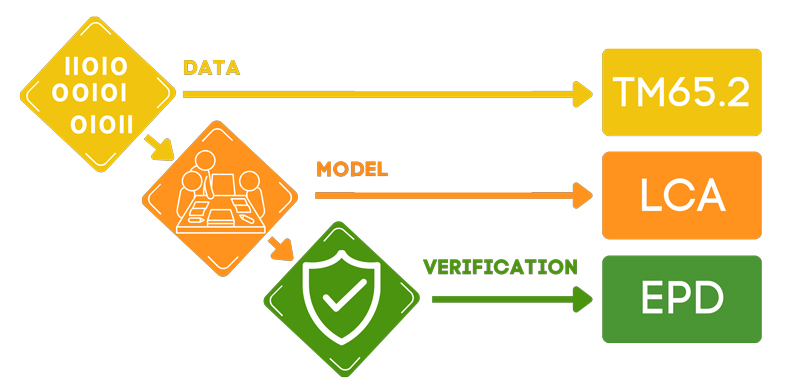
To facilitate this transition, platforms like One Click LCA have emerged, streamlining the process of conducting LCAs and generating EPDs. These tools make comprehensive environmental assessments more accessible to manufacturers, enabling them to meet the growing demand for transparency in product sustainability.
In summary, as the lighting industry continues to prioritise sustainability, understanding and implementing frameworks like TM66, TM65, LCAs, and EPDs are vital. These tools not only help manufacturers assess and improve the environmental impact of their products but also provide transparent, credible information to facility managers and procurement teams, supporting informed choices across the estate.